How Nigerian Logistics Companies Save ₦50M+ Annually with Smart Route Optimization
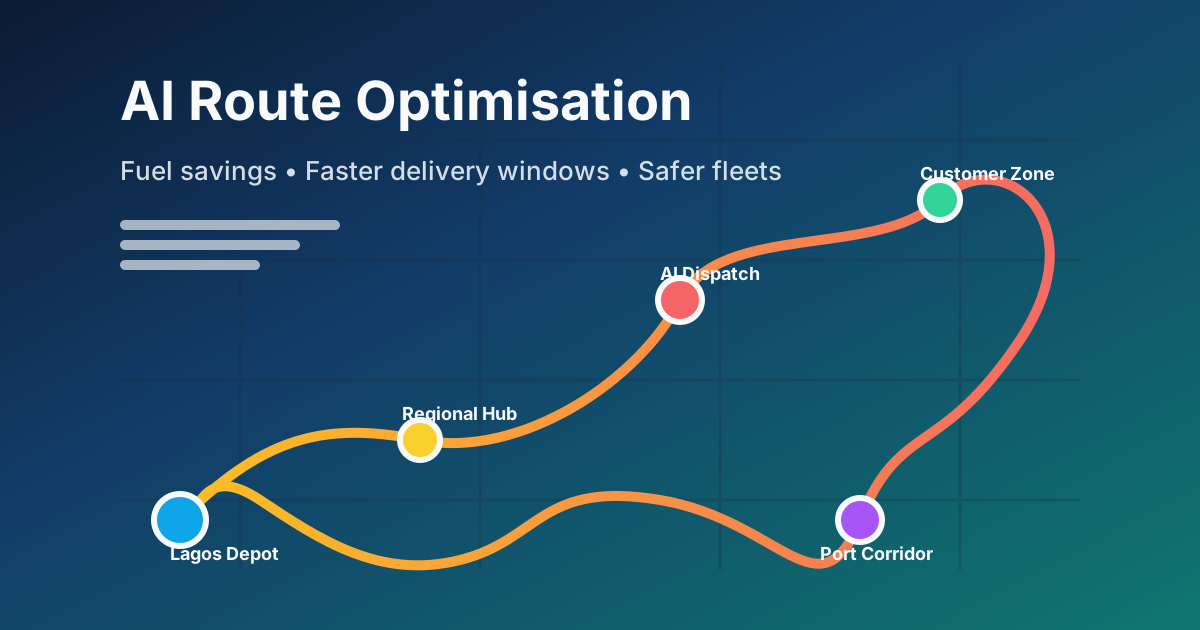
Case studies outlining how AI-powered route optimisation helps Nigerian logistics firms reduce fuel spend, shrink delivery windows, and improve driver safety.
32%
Fuel Spend Reduction
95%
On-Time Delivery
-41%
Driver Incidents
The Pressure on Nigerian Delivery Networks
Urban congestion, fluctuating fuel prices, and unpredictable road closures in Lagos, Abuja, and Port Harcourt have pushed logistics teams to redesign routing from scratch. Traditional manual planning can rarely account for daylight restrictions, toll variability, or security advisories.
AI-powered routing platforms synthesise live traffic feeds, historical journey times, and customer delivery windows to produce realistic runs that dispatchers trust. For regional operators moving FMCG goods, the shift from static plans to dynamic optimisation has been transformative.
Case Study: FMCG Distributor in Lagos
A Lagos-based FMCG distributor servicing 480 retail outlets implemented RateMe’s optimisation engine across 68 vehicles. Within the first quarter, the team eliminated 1,200 km of redundant mileage per week and saved ₦18.7M in fuel.
Operationally, dispatchers used simple drag-and-drop interfaces to adjust for last-minute orders. The system recalculated ETAs instantly, and drivers received updates through a lightweight mobile app that works on low-cost Android devices.
- Dynamic load balancing factored in cold-chain requirements for perishable SKUs.
- Geo-fencing around high-risk neighbourhoods kept drivers on approved corridors.
- Automated proof-of-delivery reduced reconciliation time by 60%.
Case Study: B2B Courier Network in Abuja
A courier network handling government document deliveries in Abuja struggled with SLA breaches because of ministry-specific access hours. After introducing predictive routing, their SLA adherence climbed from 72% to 96% without increasing fleet size.
The system fed dispatchers real-time alerts about procession-related road closures and automatically resequenced deliveries. A digital command centre showcased heat maps of completed versus pending drops, giving executives the visibility they needed during audits.
Implementation Blueprint
Route optimisation success is not purely a software story. High-performing teams invest in driver education, data governance, and cross-functional analytics. Start with a one-month baseline assessment to calibrate costs, dwell times, and driver availability.
Couple the algorithm rollout with incentive schemes that reward safe driving and accurate digital check-ins. Nigerian fleets that combine technology with human-centred change routinely reach annual savings above ₦50M once the solution scales nationwide.
- Cleanse location data and enforce standardised addressing conventions.
- Integrate fuel card or telematics data to validate savings transparently.
- Evolve KPIs beyond cost to include customer satisfaction and driver wellness metrics.
Key Takeaways
- Dynamic routing mitigates congestion, toll, and security volatility in Nigerian cities.
- Case studies show double-digit savings and SLA improvements without expanding fleet size.
- Pair algorithms with driver enablement and analytics to sustain annual savings beyond ₦50M.