Asset Management Best Practices for Nigerian Manufacturing
Guidance for industrial operators on centralising asset data, scheduling preventive maintenance, and ensuring compliance in Nigeria’s challenging conditions.
Create a Single Source of Asset Truth
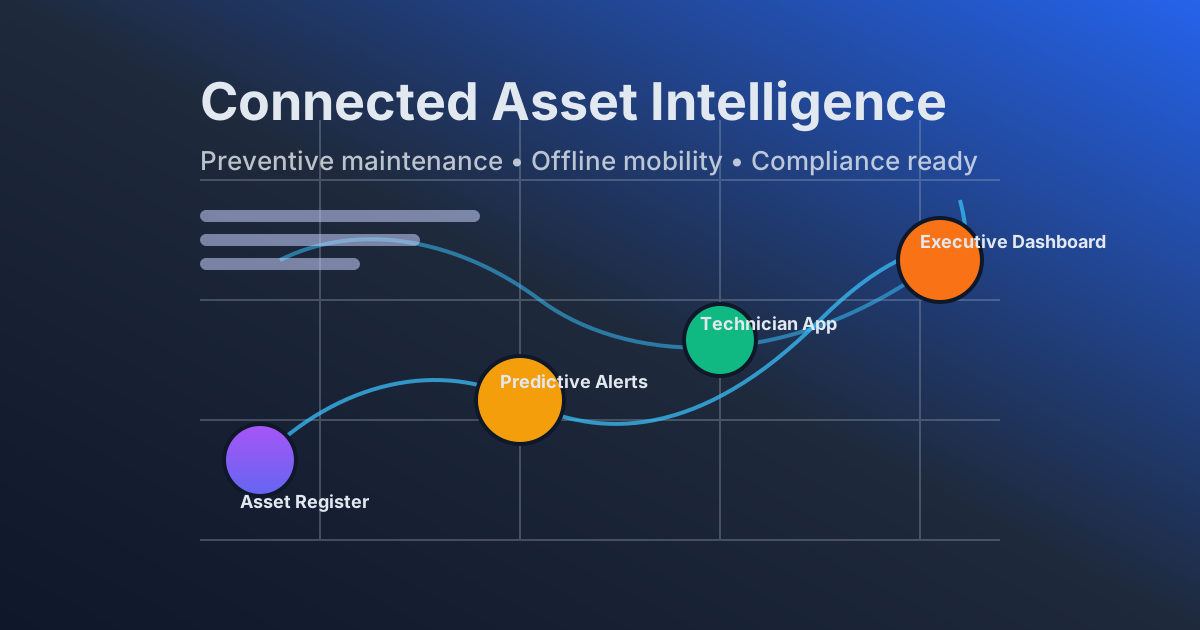
Multiple spreadsheets and whiteboards are still the norm across Nigerian shop floors, making it hard for maintenance teams to respond quickly. A centralised asset register that combines serial numbers, lifecycle state, and maintenance history is the foundation for reliability.
RateMe clients typically ingest data from legacy ERPs, handheld scanners, and manual audits into a cloud CMMS layered over the ERP. With QR-coded asset tags, technicians view service history instantly even when offline.
- Segment assets by criticality to production output and safety risk.
- Map dependencies (power, cooling, raw material feeds) to understand cascading failures.
- Automate change logs for engineering modifications and retrofits.
Shift from Reactive to Preventive Maintenance
In environments where spare parts lead times exceed eight weeks, preventive maintenance is non-negotiable. Statistical analysis of breakdown records helps determine optimal servicing intervals for generators, bottling lines, and packaging units.
Manufacturers that adopted condition monitoring with IoT sensors on key equipment reduced unplanned downtime by 28% within six months. The data also justified capital expenditure on redundant systems where failure risk was highest.
- Start with vibration and temperature sensors on high-value rotating equipment.
- Use mobile checklists with photographic evidence to increase audit compliance.
- Link work orders to inventory reservations to prevent part shortages on service day.
Build a Culture of Accountability
Technology enables efficiency, but culture sustains it. Plant leaders should publish weekly maintenance dashboards and celebrate teams that close work orders on schedule. High performers run tiered daily meetings where issues escalate rapidly.
Training programmes tailored for technicians—delivered in English and local languages—have improved adoption in facilities outside major cities. Gamified leaderboards keep teams engaged even when operating under tight budgets.
- Define clear ownership for each asset class and publish RACI matrices.
- Budget for continuous training on both digital tools and safety procedures.
- Align performance bonuses with reliability metrics, not just throughput.
Key Takeaways
- Centralised asset registers empower technicians with actionable history in the field.
- Predictive monitoring shortens downtime and protects against long import lead times.
- A disciplined maintenance culture keeps improvements resilient to budget shocks.