The State of Enterprise Software in Nigeria: What's Broken and What's Next
A look at Nigeria's booming digital transformation market, what's broken about how businesses adopt ERP and enterprise software, and the build-up approach that works.
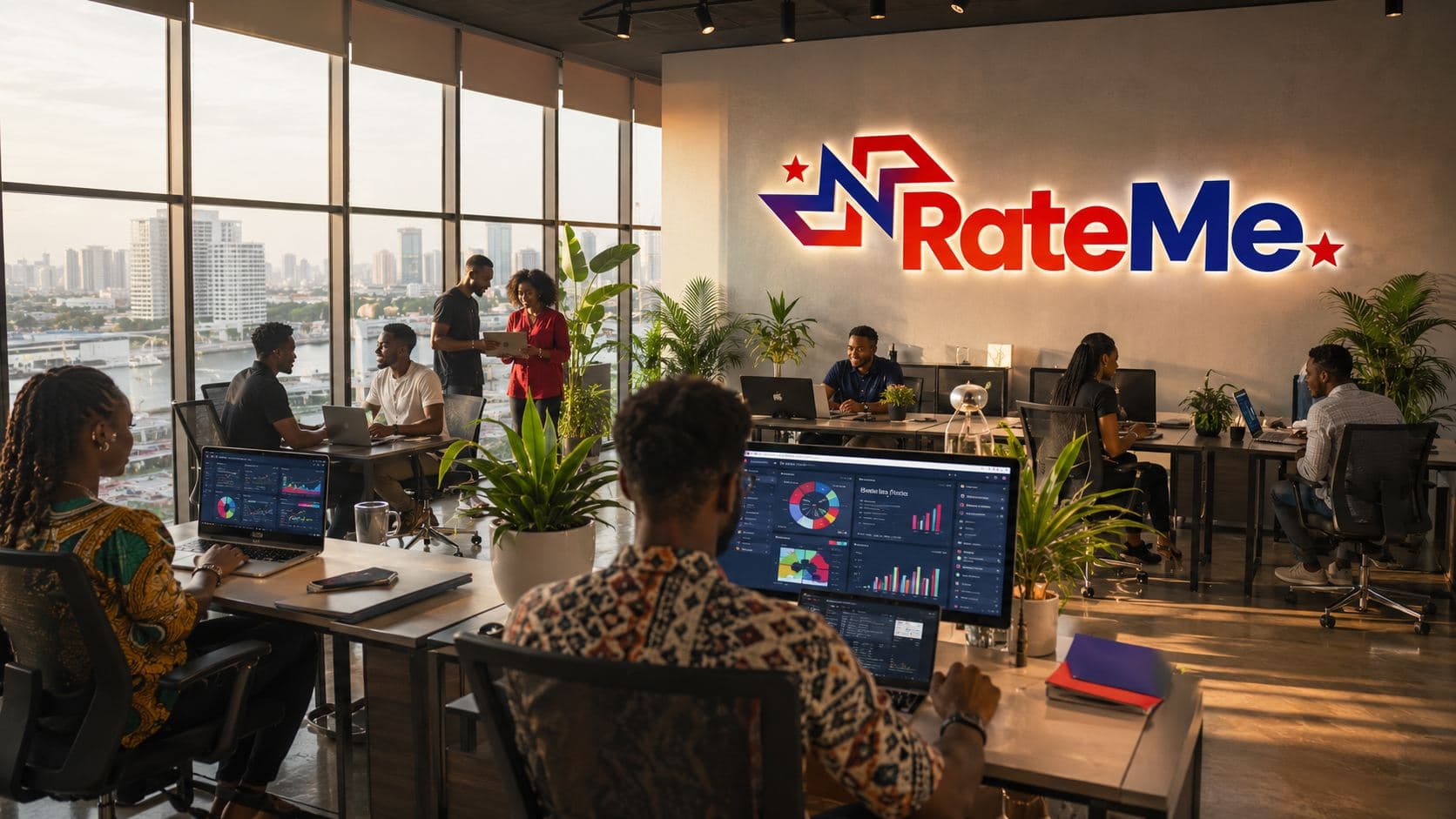
There's a shift happening in Nigerian business right now that doesn't get talked about enough, because it's quieter than a funding announcement and slower than a product launch. It's the moment a business owner stops running everything from their head, a notebook, and a WhatsApp group — and decides they need a system.
That moment is happening at scale. And how we handle it over the next few years will decide whether Nigerian companies build durable digital foundations or just accumulate expensive software they don't use. I've spent years building management systems for businesses here, and I want to lay out honestly where we are, what's broken, and where I think this goes next.
The numbers say the wave is real
This isn't hype. Nigeria's digital transformation market sits at roughly $14 billion in 2026 and is on track to nearly triple by 2031, growing at over 17% a year. Small and medium businesses — long the slowest to digitise — are now the fastest-growing segment, projected to grow above 20% annually over that stretch.
And the payoff is measurable, not theoretical. In one study of 200 SMEs across Lagos, Abuja, and Port Harcourt, the businesses that adopted digital tools meaningfully reported around 15% revenue growth, while the laggards saw gains under 5%. The gap between the digitised and the not-yet is widening into a real competitive divide.
You can feel it in what business owners are asking for, too. The demand has moved on from “I need a website.” Owners now want integrated platforms that actually run the business — inventory, sales, accounts, customers, all connected. The ambition has grown up. The question is whether the way we deliver on it has grown up with it.

What's broken
Here's my honest read on where we keep tripping.
We confuse buying software with solving a problem. The most common and most expensive mistake I see is a business choosing a tool because it demoed well, before anyone has clearly defined the problem it's meant to solve. A polished demo is not a diagnosis. Software bought this way almost never fits the real operation, and it quietly gets abandoned.
We import rigidity and call it best practice. A lot of enterprise software sold here was designed for businesses operating under conditions we don't have — reliable power, constant connectivity, processes that match a Western textbook. When a Nigerian company adapts its workflow to survive our market and then buys a rigid foreign system, the system wins the argument. The business contorts itself to fit the software instead of the other way round. That's backwards.
We treat the big bang as the only option. The dominant story sold to Nigerian businesses is still: buy one large system, roll it out across everything, transform overnight. It's a story with a terrible track record, because it asks a company to change everything at once and bet heavily that it all works. When it doesn't, the lesson people take away is “software doesn't work for us” — when the real problem was the size of the leap.
The skills gap is real on both sides. Research on West African SMEs consistently flags a digital skills gap and infrastructure deficits as top barriers. But it cuts two ways. Buyers often don't know what good looks like, and too many builders are happy to sell whatever closes the deal rather than what the business will still be using in three years.

What's next — and what should be
The encouraging news is that the smarter end of the market is already learning. There's growing agreement that a stepwise approach beats the big bang — start small, prove value, grow gradually, don't overwhelm the business. I agree with all of that. But I want to push the conversation one step further, because “start small” on its own isn't enough, and if we stop there we'll create a new mess to clean up later.
Here's the part the stepwise advice usually misses: the steps have to be built to connect.
It's entirely possible to start small, solve three problems one at a time, and end up with three disconnected apps that can't talk to each other. You've avoided the big-bang risk and walked straight into a different trap — a pile of digital islands, and a fresh integration headache every time you want two of them to share data. That's not a foundation. That's clutter.
The approach that actually compounds is to fix your most critical process first — the one hurting most that you can solve without freezing the rest of the business — and to build that first system already engineered to couple with the next one. Structured data, deliberate connection points, designed from day one for a future it doesn't have yet. Then you do the next process the same way. And the next.
Do that, and something quietly powerful happens: the pieces converge. A few well-built, connection-ready systems grow together into the integrated platform everyone wanted in the first place — except you arrived there by accumulating wins instead of betting the company on one rollout. You grew the ERP. You didn't gamble on it.
That's the shift I want to see in how Nigeria builds enterprise software. Not “buy big or stay analog.” Not even just “start small.” But start small, build for convergence — treat every system you build as a future piece of a larger whole, and engineer it that way from the first line.

The real opportunity
Nigeria's enterprise software story is being written right now, and we get to choose the plot. We can keep importing rigid systems and rolling them out in expensive, all-or-nothing gambles — and keep producing the failure stories that make owners cynical. Or we can build the way the conditions here actually demand: incrementally, locally, intelligently, with every piece designed to join the next.
The businesses digitising now will pull ahead of the ones that wait — the data already shows that. The only real question is whether they build foundations that compound, or piles of software that don't. That choice, more than any tool, is what's next.
Nonso is the founder of RateMe, where we build custom management systems for Nigerian businesses — each one engineered from day one to connect into the bigger picture as you grow. If this is the conversation your business is having internally right now, reach out.
Got a system like this to build?
Tell us what you're running and we'll show you what a system built around your organisation looks like.
Book a discovery call