Before the ERP: How We Build Systems That Are Ready to Grow Into One
Inside RateMe's Build-Up Method — the engineering discipline behind building Nigerian business systems that are genuinely ready to connect and grow into a full ERP.
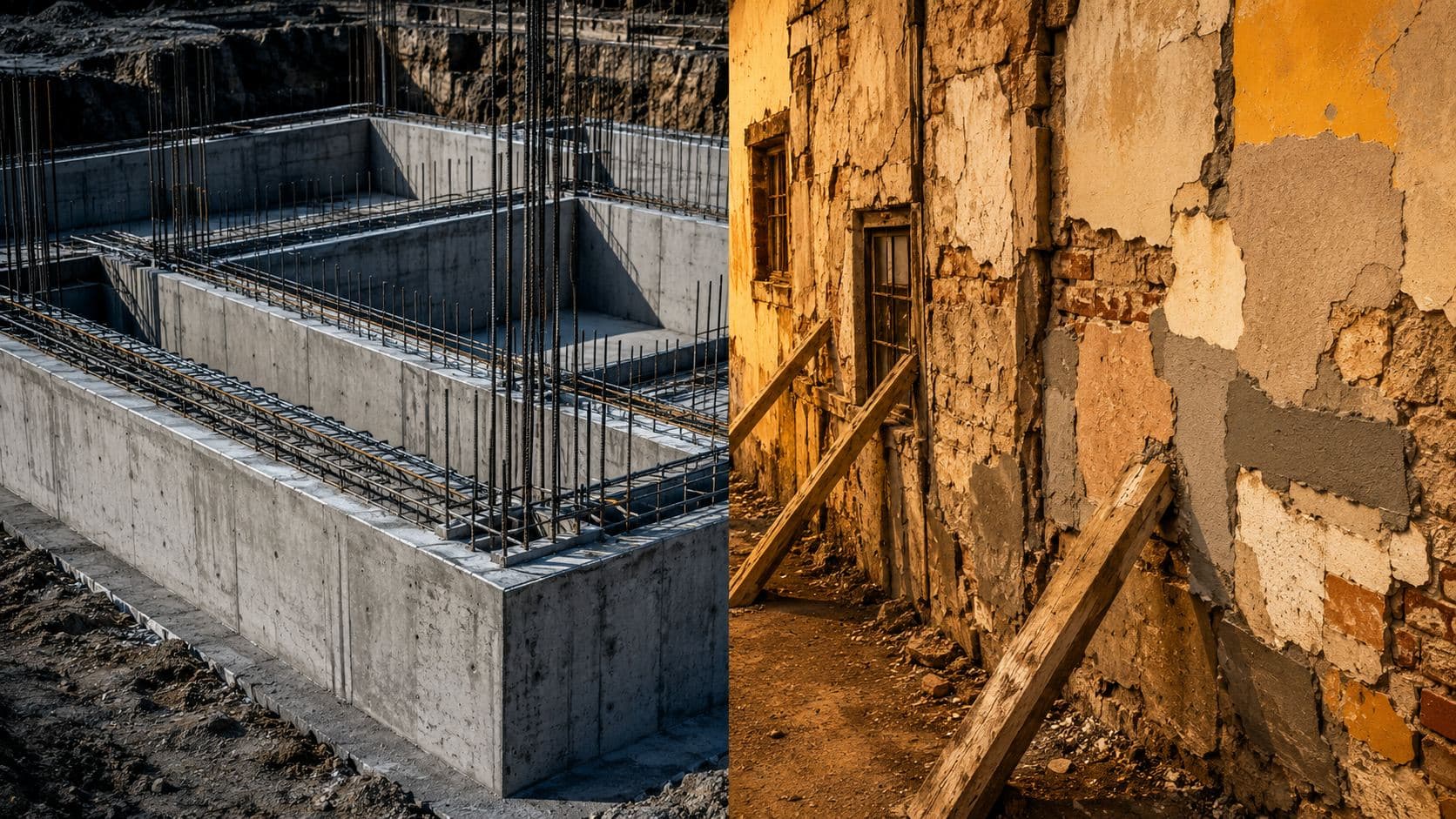
If you've shopped for custom software in Nigeria lately, you've read the same page a dozen times. Every shop builds “scalable, cloud-native, integration-ready” systems with “seamless API integration” and “future-ready architecture.” The words are identical because they've stopped meaning anything. Everyone says their software will integrate and scale. Almost nobody tells you how, or in what order, or why the order matters.
This post is the how. It's the methodology we use at RateMe, and we've given it a name because it's a real discipline, not a feature list: the Build-Up Method. The creed is simple — start small, build for convergence — and the rest of this post is what that actually means when you're writing the code.
It's written for people who build, or who hire builders and want to know whether the builder actually knows what they're doing. If that's you, read on.
The problem with “integration-ready” as a buzzword
“Integration-ready” gets sold as a property of finished software — a box you tick at the end, an API you bolt on, a promise that it'll play nice later. That's backwards. Integration-readiness isn't something you add to a system. It's something you decide before you write the first line, and it shapes every decision after.
A system that's genuinely built to couple with others looks different from the inside than one that isn't — even if they do the exact same job today. The difference is invisible in the demo and decisive two years later. That's the part the buzzword hides, and it's the entire game.
Step one: build the right thing first, not the whole thing
The Build-Up Method starts with a question most ERP conversations skip: what is the one system worth building first?
Not the biggest. Not the flashiest. The one that meets two conditions at once:
- It's causing real, expensive pain. Inventory you can't trust, accounts that never reconcile, a fulfilment process leaking time and money.
- You can replace it without freezing the rest of the business. This is the constraint people forget. The most critical process isn't always the safest first target — if fixing it means halting everything around it, you've created a bottleneck worse than the one you're solving. You want maximum relief for minimum disruption.
Get that selection right and the first system pays for itself fast, proves the approach to a skeptical team, and gives you a stable base to build from. Get it wrong — pick something too tangled, too central, too risky to touch — and you've recreated the big-bang problem at smaller scale.
This selection step is judgment, not code. It's also the step the buzzword shops skip entirely, because “we'll build whatever you ask for” closes the deal faster than “let's figure out what you should build first.”

Step two: build it as if it has a future (because it does)
Here's where integration-readiness stops being a slogan and becomes engineering decisions.
When we build that first system, we build it already knowing it will one day need to share data with systems that don't exist yet. In practice, a few principles do most of the work:
Model the data for more than today's job. The single biggest reason systems can't couple later is that their data was structured only for their own narrow purpose. We model entities — customers, products, transactions, whatever the domain needs — in clean, well-defined terms that another system could read without a translator. A “customer” in the sales tool should be recognisably the same “customer” the accounts tool will need, not a private, incompatible version of one.
Expose clean boundaries from day one. The system talks to the outside world through deliberate, well-defined interfaces — not by letting other tools reach directly into its guts. This is the real, unglamorous meaning of “API-first”: the connection points exist and are clean before anything needs them, so the next system plugs in instead of prying in.
Keep a single source of truth for each fact. Decide early what system owns what data, so that when systems couple, they reconcile instead of contradict. Most “our software doesn't agree with itself” nightmares are really two systems each thinking they own the same fact.
Build for our conditions, not a brochure's. Power and connectivity here aren't guaranteed, so systems are built to tolerate going offline and syncing when they reconnect — not to assume a perfect always-on world that doesn't exist on the ground.
None of this is visible when the first system ships. It does its one job. But under the surface, it's already shaped to join the next one.

Step three: do it again — and watch it converge
Then you build the next system the same way. And the next. Each one solves a real problem on its own and is engineered to couple with what came before.
Because every piece was built to clean boundaries and a shared data language, linking them is connection, not surgery. Inventory starts talking to sales. Sales starts talking to accounts. The systems that were each useful alone begin to act like one system — and quietly, without a single terrifying rollout, you've grown the thing everyone else tries to buy in one go.
That's the convergence in “start small, build for convergence.” You didn't gamble the company on a big-bang ERP. You didn't end up with a pile of disconnected apps that can't talk, either — which is the trap of starting small without building for connection. You arrived at an integrated platform by accumulating wins, each one safe, each one designed from birth to be part of the whole.
Why this needs a real engineer
Here's the honest pitch. You can find someone to build you a system cheaper. What you usually can't tell, until it's too late, is whether they built you a future or an island.
An island works today and traps you tomorrow — its data is private and malformed, it has no clean boundaries, and when you finally want it to talk to something else, the only options are an ugly bolt-on or a rebuild. It demos exactly as well as a system built properly. The difference only shows up when you try to grow, which is precisely when you can least afford to discover it.
Building for convergence is a skill, and it costs a little more attention up front. That up-front attention is the entire value. It's the difference between software you'll keep building on for years and software you'll be apologising for by next year.

Before the ERP
So before you buy a big system, or commission a custom one, ask the builder a simple question: what will you build first, and how will it connect to what I build next? If they answer with a buzzword, keep looking. If they answer with a method, you've found someone who'll still be useful to you in three years.
That method is the Build-Up Method. Start small. Build for convergence. Grow into the ERP instead of betting on it.
RateMe builds custom management systems for Nigerian businesses using the Build-Up Method — each system solving a real problem now, and engineered from day one to converge into the integrated platform you'll need later. If you want to build the right thing first, and build it to last, let's talk.
Got a system like this to build?
Tell us what you're running and we'll show you what a system built around your organisation looks like.
Book a discovery call